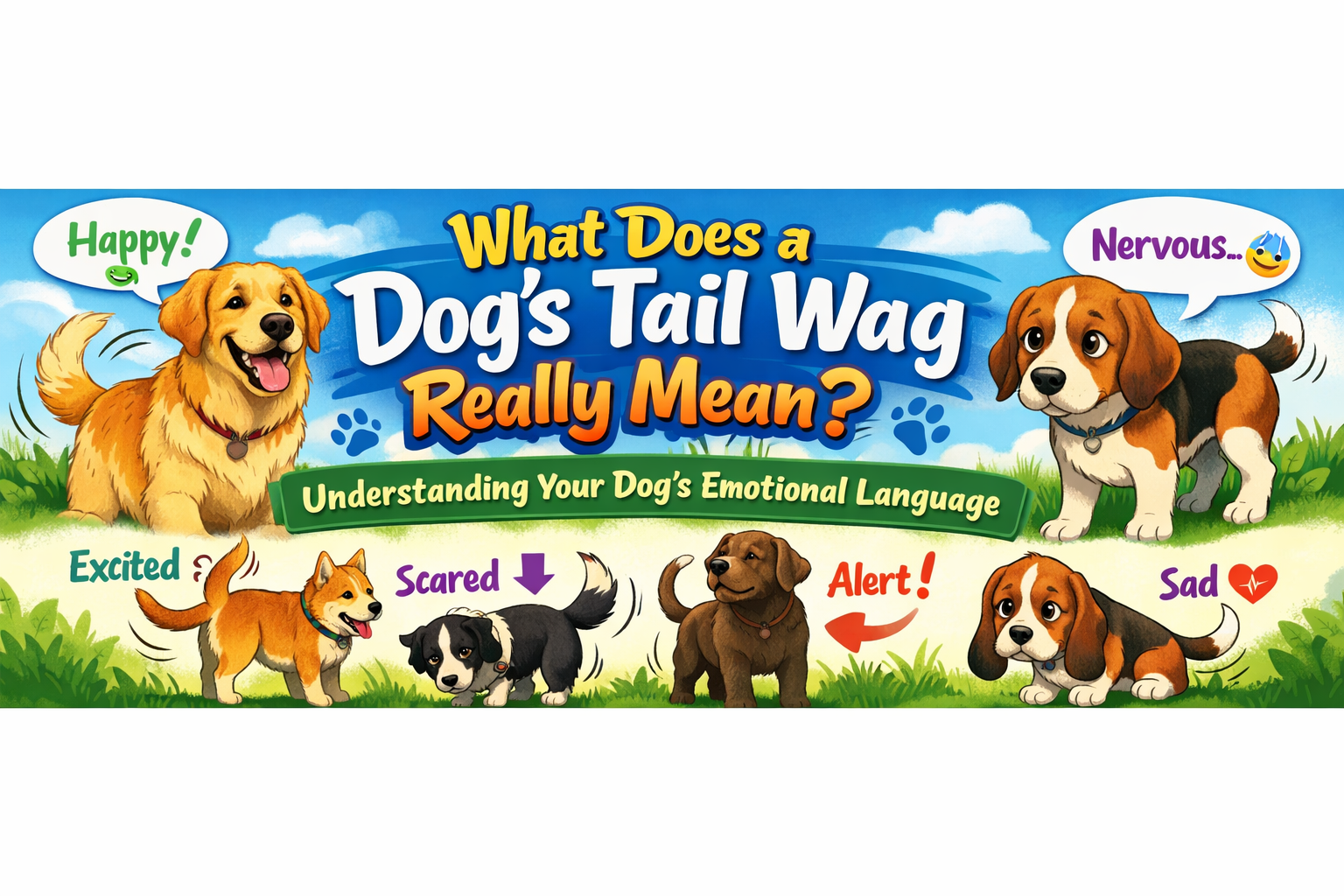
For centuries, humans have interpreted a wagging tail as the universal sign of a happy dog. We see that rhythmic swish and immediately assume our canine companion is delighted to see us, excited about dinner, or simply experiencing pure joy. However, the reality of canine communication is far more nuanced and complex than this simplistic interpretation suggests. A dog’s tail is actually a sophisticated communication tool that conveys a rich spectrum of emotions, intentions, and psychological states—and misreading these signals can sometimes lead to unfortunate misunderstandings or even dangerous situations.
The Science Behind the Wag: How Dogs Use Their Tails to Communicate
Dogs evolved from wolves, social animals that relied heavily on body language to maintain pack hierarchy, coordinate hunts, and avoid conflicts. The tail became a crucial component of this non-verbal communication system, functioning almost like a semaphore flag that broadcasts emotional states to other pack members from a distance. Modern domestic dogs have retained and refined this communication method, using their tails to convey messages not just to other dogs, but to humans, cats, and any creature paying attention.
Research conducted by animal behaviorists has revealed that tail wagging is far from a simple binary signal. The speed of the wag, the height at which the tail is held, the direction of the movement, and even which side the tail favors all contribute to the message being transmitted. In 2007, Italian researchers discovered something remarkable: dogs actually wag their tails more to the right when they’re experiencing positive emotions and more to the left when experiencing negative ones. This asymmetry reflects the lateralized processing of emotions in the canine brain, similar to how human brains process different emotions in different hemispheres.
Decoding Tail Position: The Foundation of Canine Communication
Before we can understand what different wags mean, we must first examine tail position—the baseline from which all tail communication begins. A dog’s neutral tail position varies by breed (a Husky’s natural curl differs dramatically from a Greyhound’s low-hanging tail), but deviations from each dog’s baseline carry significant meaning.
High Tail Position: When a dog holds their tail high and relatively stiff, they’re displaying confidence, alertness, or assertiveness. Picture a German Shepherd on patrol duty, tail raised like a flag as they survey their territory. This position doesn’t necessarily indicate aggression, but it does signal that the dog feels in control of the situation and is ready to respond to any development. If this high tail begins to wag slowly and stiffly, the dog might be assessing a situation with some arousal or uncertainty—not quite aggressive, but definitely not relaxed.
Neutral Tail Position: A tail held in its natural, relaxed position suggests a calm, content dog comfortable with their surroundings. Think of a Labrador Retriever lounging in the backyard on a sunny afternoon, tail resting naturally as they watch the world go by. When a tail in neutral position begins wagging at moderate speed with loose, fluid movements, you’re witnessing genuine contentment and friendliness.
Low or Tucked Tail Position: A tail held low or tucked between the legs signals fear, anxiety, submission, or discomfort. Imagine a rescue dog’s first day in a new home—tail tucked tight against their belly as they navigate unfamiliar territory. A tucked tail minimizes the dog’s profile and protects vulnerable areas, a defensive posture rooted in survival instincts. If a low tail wags slowly and tentatively, the dog is expressing uncertainty and submissiveness, essentially saying “I’m not a threat, please don’t hurt me.”
The Speed and Intensity Factor: What Different Wag Speeds Tell Us
The velocity and vigor of a tail wag provides crucial context to the position-based signals, creating a more complete emotional picture.
Slow, Deliberate Wags: These measured movements often indicate a dog assessing a situation, feeling uncertain, or approaching cautiously. Consider this real-life scenario: Sarah’s Golden Retriever, Max, encounters a new dog at the park. His tail, held at neutral height, begins wagging slowly as he approaches. This measured wag communicates “I’m interested and cautiously friendly, but I’m not sure about you yet.” It’s the canine equivalent of a tentative handshake with someone you’ve just met. However, if that slow wag accompanies a high, stiff tail, it transforms into a warning—think of it as a dog saying “I see you, I’m alert, and I’m deciding how to respond.”
Fast, Vigorous Wags: Rapid tail wagging typically signals high arousal and excitement, though not always positive excitement. When your dog’s tail becomes a blur upon your return home, wagging so hard their entire backend wiggles—what behaviorists call the “helicopter tail” or “full body wag”—you’re witnessing pure, uncontrolled joy. This is the tail wag that makes us feel loved and appreciated.
However, fast wagging isn’t always happiness. Picture this: Tom’s terrier spots a squirrel in the yard. His tail shoots up and begins vibrating rapidly, his entire body tense with predatory focus. This fast, high wag indicates intense arousal and excitement, but of the hunting variety rather than friendly greeting. The difference lies in the accompanying body language—the stiff body, forward-leaning posture, and fixed stare reveal the true nature of the excitement.
Broad, Sweeping Wags: These wide-amplitude wags, where the tail swings in large arcs, generally indicate friendliness and positive emotions. The broader and more relaxed the wag, the more genuinely friendly the dog feels. Jennifer’s Beagle demonstrates this perfectly when greeting familiar friends—her tail describes huge semicircles, her body wiggles, and her face displays relaxed, open features. This is the wag of a dog experiencing uncomplicated happiness and social comfort.
The Direction of the Wag: A Subtle but Significant Detail
The groundbreaking research revealing that dogs wag right when happy and left when anxious has profound implications for understanding canine emotions. Right-sided wags activate when dogs see their owners, encounter friendly dogs, or experience positive stimuli. The left-sided wag emerges when dogs face potential threats, unfamiliar dogs, or stressful situations.
In practical terms, imagine observing two dogs meeting. If both dogs show right-biased wagging, the interaction will likely be friendly. If one dog’s tail biases left, that dog is uncertain or uncomfortable, and the interaction requires careful supervision. This detail is subtle—most people won’t notice unless specifically looking for it—but it provides valuable insight into canine emotional states.
Context Is Everything: Reading the Whole Dog
Perhaps the most critical lesson in understanding tail wags is this: never read the tail in isolation. The tail is just one component of comprehensive body language that includes ear position, facial expression, body posture, vocalizations, and overall tension levels.
Consider this real-world example: Michael approaches a chained dog in a neighbor’s yard. The dog’s tail is wagging—rapidly and at medium height. Based solely on the tail, Michael might assume the dog is friendly. However, a complete assessment reveals a different story: the dog’s ears are pinned back, lips are slightly curled showing teeth, body is rigid and leaning backward, and the tail wag is stiff rather than loose. This is not a happy wag. This is an anxious, potentially aggressive dog saying “Stay away—I’m uncomfortable and will defend myself if necessary.” Michael’s decision to keep his distance, despite the wagging tail, prevents a possible bite incident.
Conversely, consider Emma’s experience at the dog park. A large Rottweiler approaches her nervous Poodle. The Rottweiler’s tail is wagging slowly at medium height. Emma initially worries, but she notices the Rottweiler’s relaxed facial expression, soft eyes, slightly opened mouth in a non-threatening pant, and loose, curvy body posture. The dog performs a play bow—front end down, rear end up—while maintaining that slow wag. Despite the measured tail movement, the complete body language package clearly communicates friendly, playful intentions. The subsequent play session confirms this reading.
Breed Variations: How Genetics Influence Tail Communication
Different breeds display tail language differently based on their genetics and physical conformation. Dogs with curled tails (like Pugs, Huskies, or Akitas) face limitations in how expressively they can use their tails. Their communication relies more heavily on other body language elements. Similarly, dogs with docked tails (whether for historical working purposes or breed standards) lose a significant communication tool, making them potentially harder to read for other dogs and requiring humans to pay even closer attention to other signals.
Working breeds like German Shepherds and Belgian Malinois tend toward more subtle, controlled tail movements reflecting their bred purpose of focused work and assessment. Herding breeds often display rapid, excited wagging that can quickly transition to intense focus when “working” (even if that means herding children or other pets). Companion breeds like Golden Retrievers and Cavalier King Charles Spaniels were bred for friendliness and tend toward more consistently happy, broad wagging.
Common Tail Wag Misinterpretations and How to Avoid Them
The most dangerous misinterpretation is assuming all wagging means friendliness. Statistics on dog bites reveal that many people bitten by dogs reported the dog was wagging their tail just before the bite. This isn’t contradictory—it reflects misunderstanding of what that particular wag communicated.
The “Friendly” Myth: Children especially fall victim to this misinterpretation. A child sees a wagging tail and runs toward a dog, not recognizing the stiff body, high tail carriage, and fixed stare indicating the dog is alert and potentially defensive. Teaching children to always ask permission before approaching dogs and to read complete body language, not just tails, prevents tragic misunderstandings.
The Submissive Wag Confusion: Some people interpret a low, fast-wagging tail as happiness when it actually signals fear or submission. Forcing interaction with a dog displaying this wag can escalate their anxiety into defensive aggression.
The Play vs. Prey Distinction: A fast, high wag during play looks similar to a fast, high wag during predatory behavior. The difference lies in the complete picture—play includes play bows, frequent breaks, role reversals, and relaxed facial expressions. Predatory behavior shows intense focus, stalking postures, and lack of the reciprocal, interactive elements characterizing play.
Practical Applications: Using This Knowledge in Daily Life
Understanding tail language improves your relationship with your own dog and helps you navigate interactions with unfamiliar dogs safely. When greeting a new dog, watch for that right-biased, broad, loose wag at neutral or slightly raised height, combined with relaxed body posture and soft facial features—this dog is truly friendly. If the wag is stiff, the body tense, or the tail extremely high or low, proceed with caution regardless of the wagging.
For dog owners, observing your dog’s tail language in different situations builds understanding of their emotional responses and preferences. Notice when your dog’s wag becomes stiffer or slows—what triggered that change? This awareness helps you advocate for your dog’s comfort and safety. If your dog’s tail drops and the wag becomes tentative at the veterinary clinic, you know they’re stressed and need extra support and reassurance.
The Tail as a Window to Canine Emotions
A dog’s wagging tail is neither simple happiness nor random movement—it’s a sophisticated communication system evolved over thousands of years to facilitate social interaction and conflict avoidance. By learning to read tail position, wag speed, wag direction, and most importantly, the complete body language context, we unlock deeper understanding of our canine companions’ emotional lives.
This knowledge transforms us from passive observers into skilled interpreters of canine communication. We become better dog owners, safer around unfamiliar dogs, and more effective advocates for appropriate human-dog interactions. The next time you see a wagging tail, look deeper. Notice the height, the speed, the looseness or stiffness, the direction, and everything else the dog is telling you through their posture, face, and energy. That wagging tail isn’t just moving—it’s speaking. And now, you’re equipped to understand the conversation.
